
 Image 1 of 5
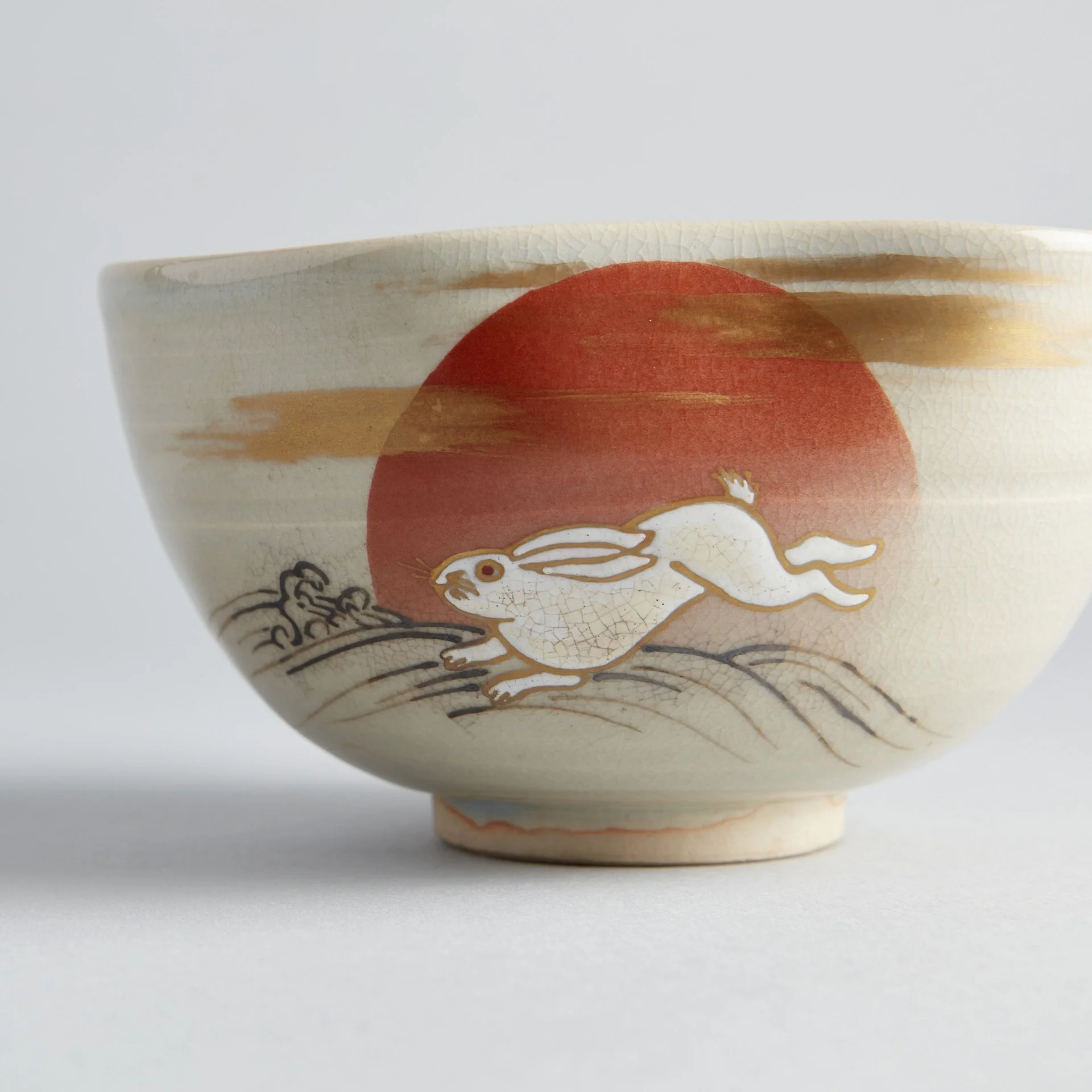 Image 2 of 5
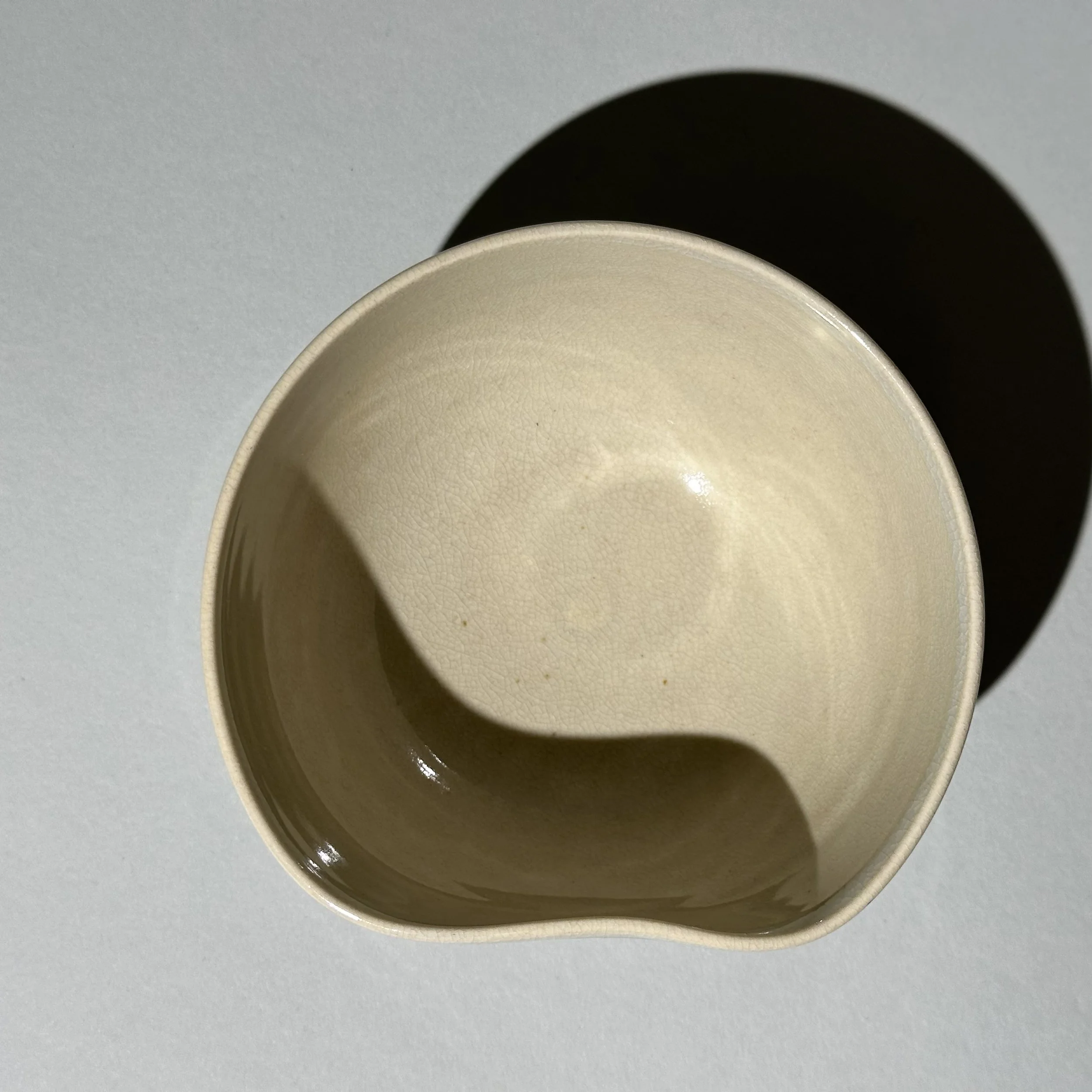 Image 3 of 5
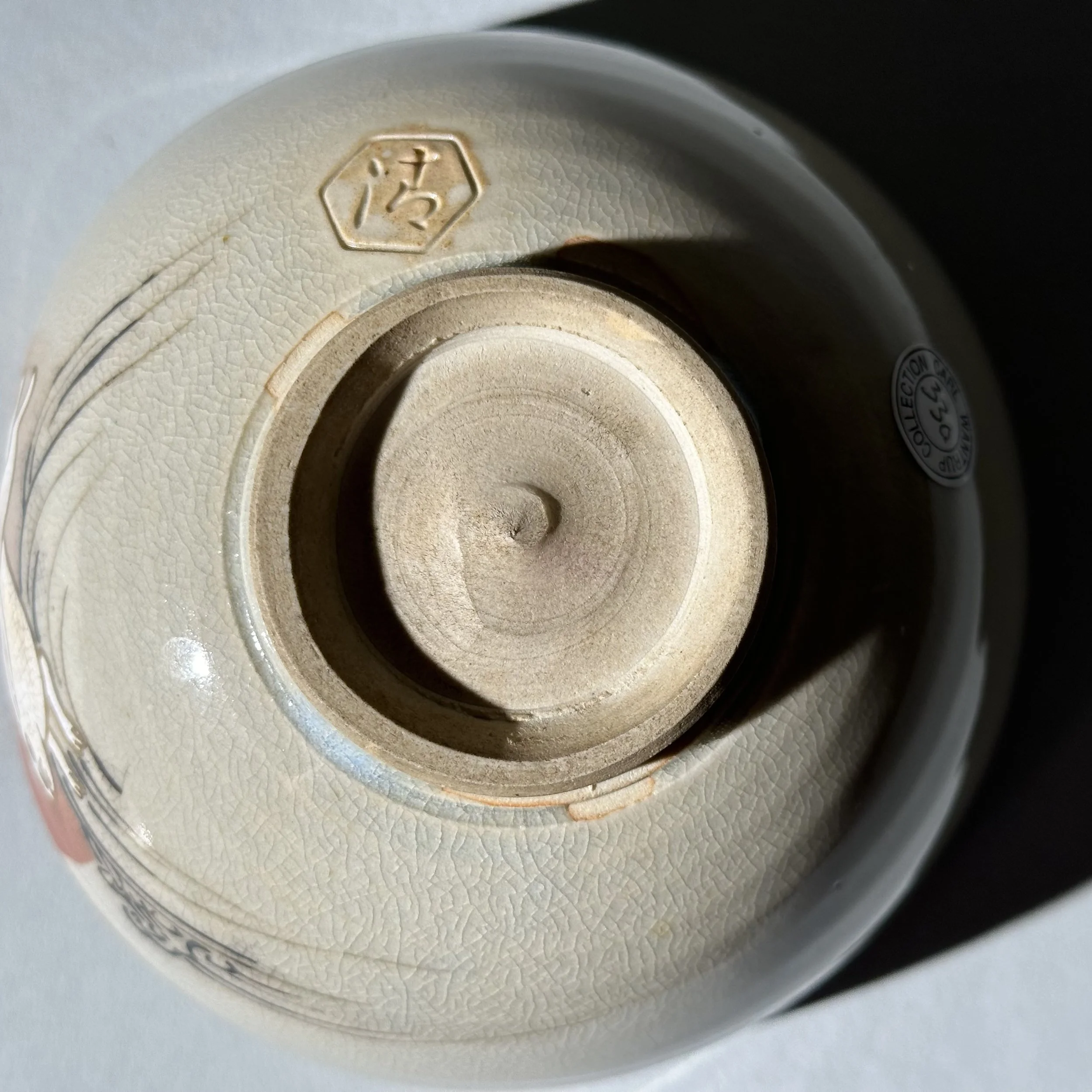 Image 4 of 5
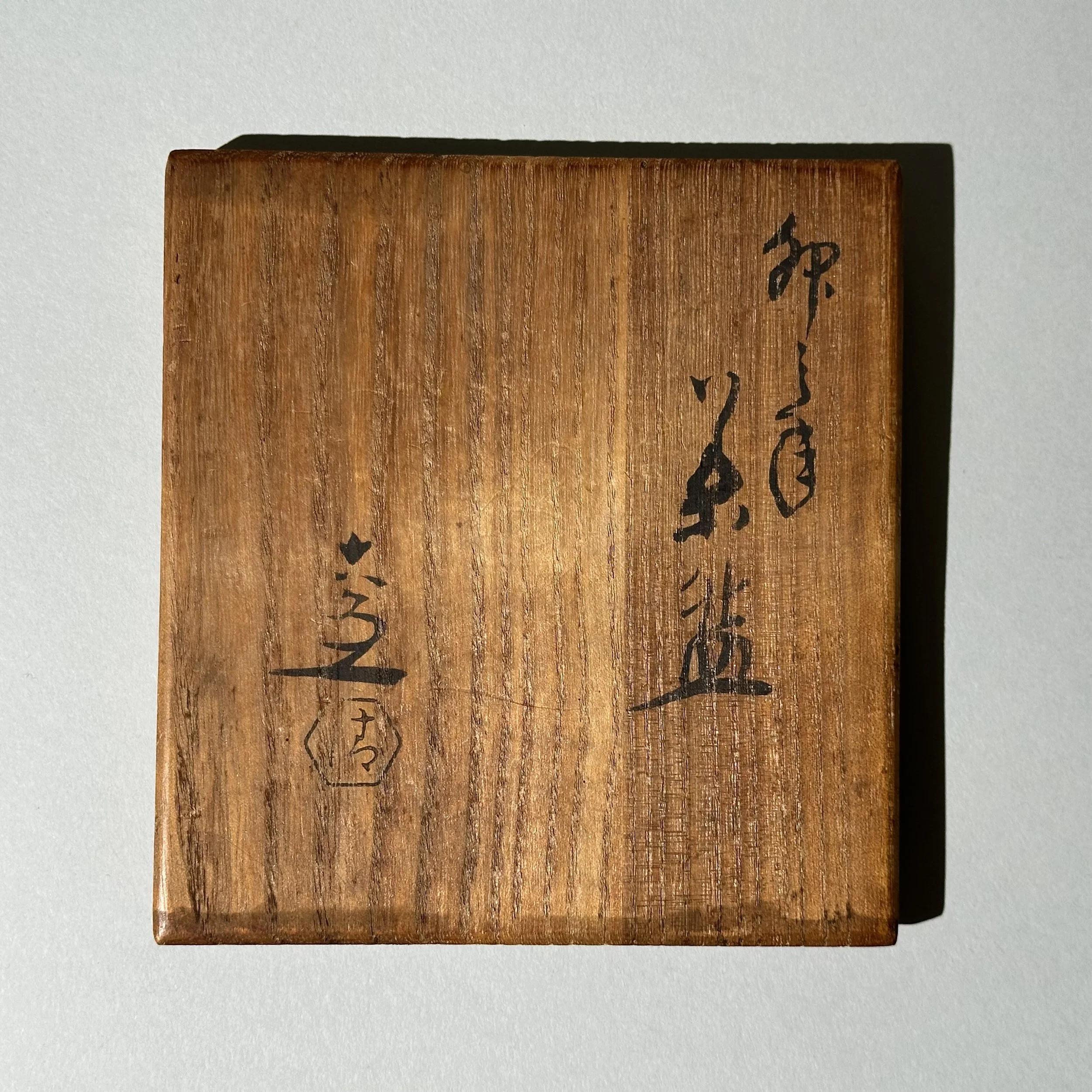 Image 5 of 5
Showa Period (1926-1989), c. 1930s
Kyoto, Japan
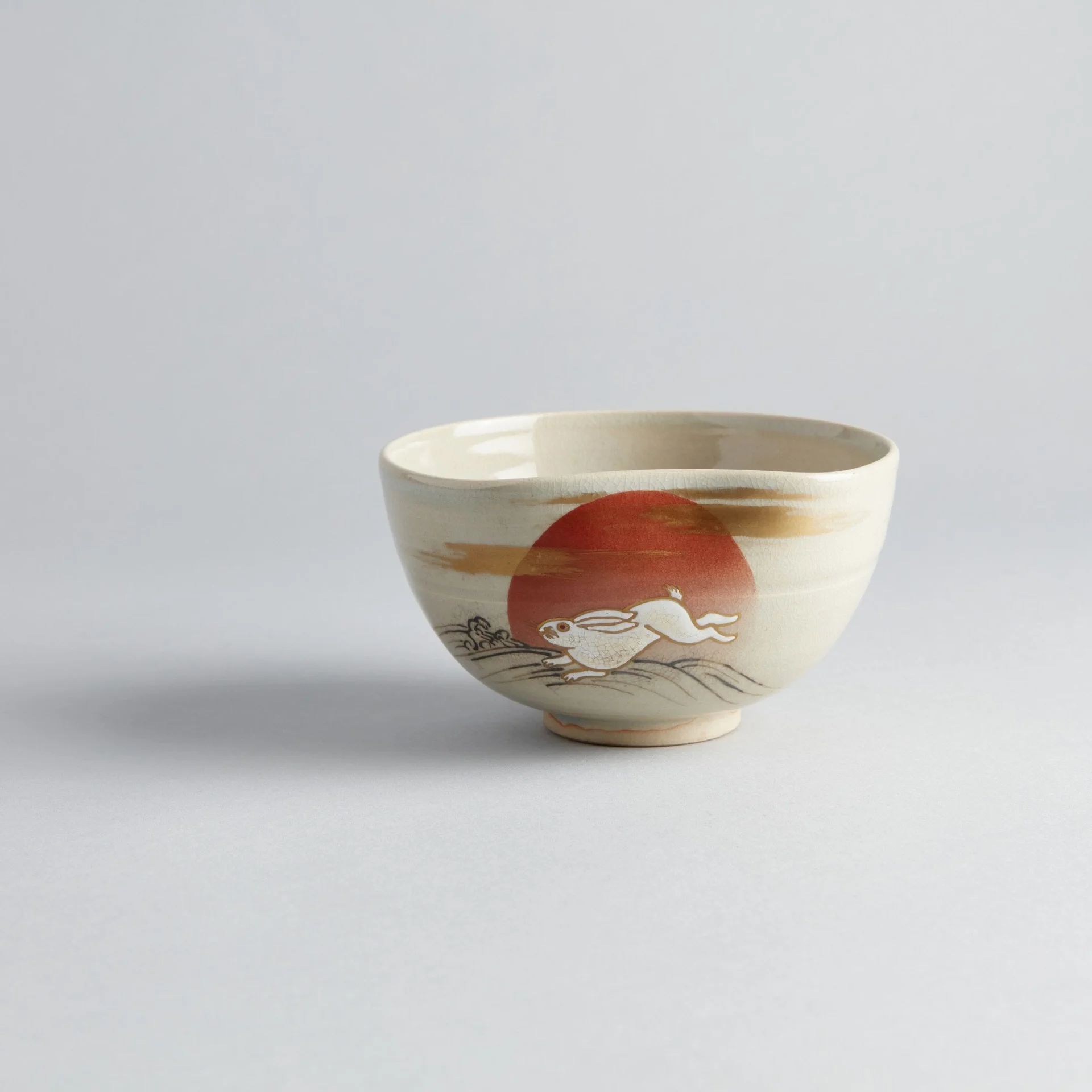
In stoneware with warped rim to the front decorated with a white rabbit leaping over waves before a red setting sun in enamels and gilding. Together with tomobako (signed box). Cat. 330
7cm high, 12.75cm diameter
Kiyomizu Rokubei V (清水六兵衛, 1875–1959), also known by his later artistic name Kiyomizu Rokuwa (清水六和), was an important Kyoto ceramic artist who played a significant role in the modernisation of traditional Kyō-yaki. Born Kuritarō, the second son of Kiyomizu Rokubei IV, he initially studied Japanese painting under Kōno Bairei before undertaking ceramic training with his father. He became the fifth-generation head of the Kiyomizu family in 1913, bringing a progressive approach to ceramic design through the incorporation of Art Nouveau influences, innovative glazes and sophisticated pictorial decoration. He was active in the reform of Japanese ceramics and participated in the establishment of the Yūtōen ceramic research group in 1903, alongside figures including Asai Chū and Nakazawa Iwata. His work combined the refined decorative traditions of Kyoto pottery with a more modern artistic sensibility, earning him recognition at major national and international exhibitions. He became a member of the Imperial Art Academy in 1930 and retired from the Rokubei name in 1945, adopting the name Rokuwa.