
 Image 1 of 3
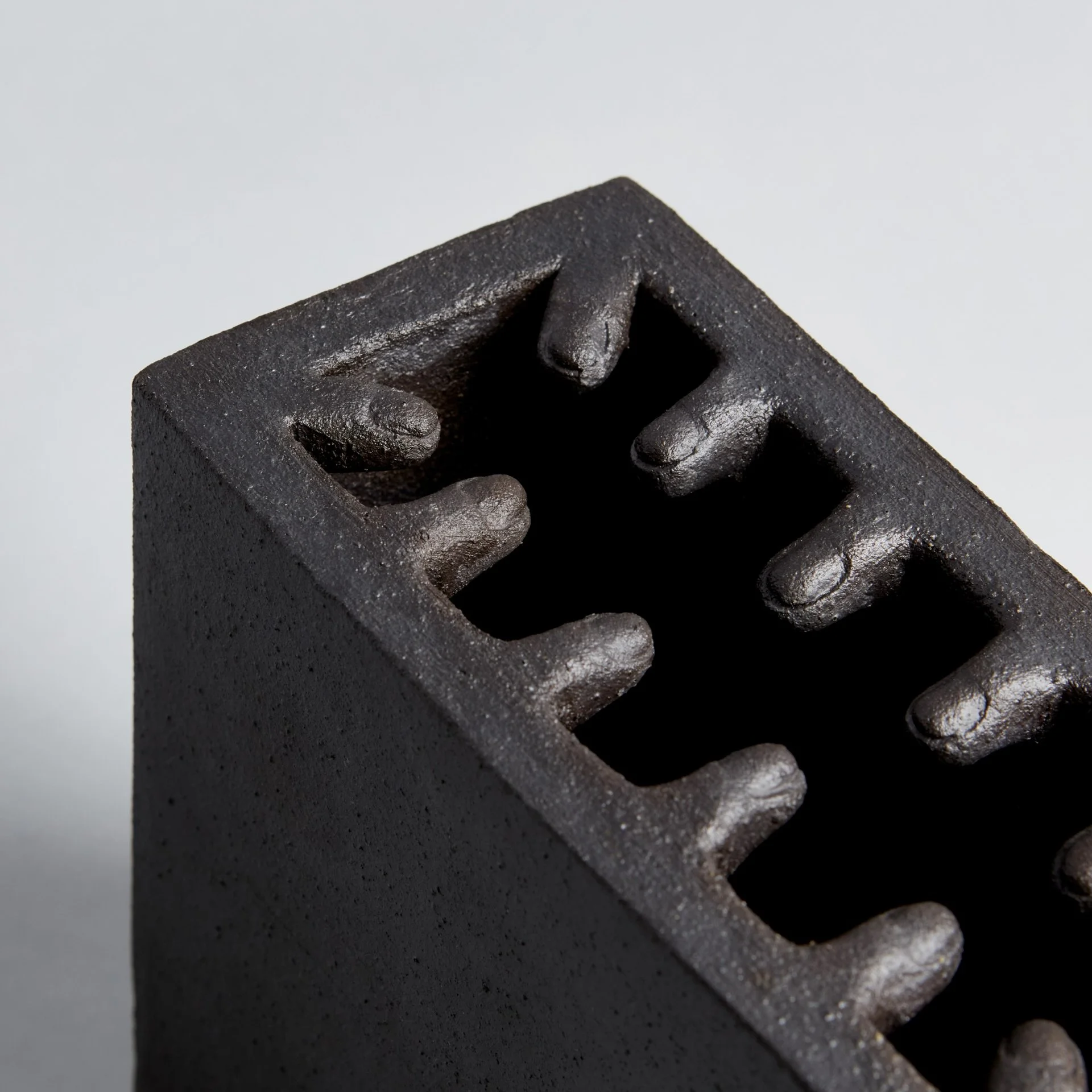 Image 2 of 3
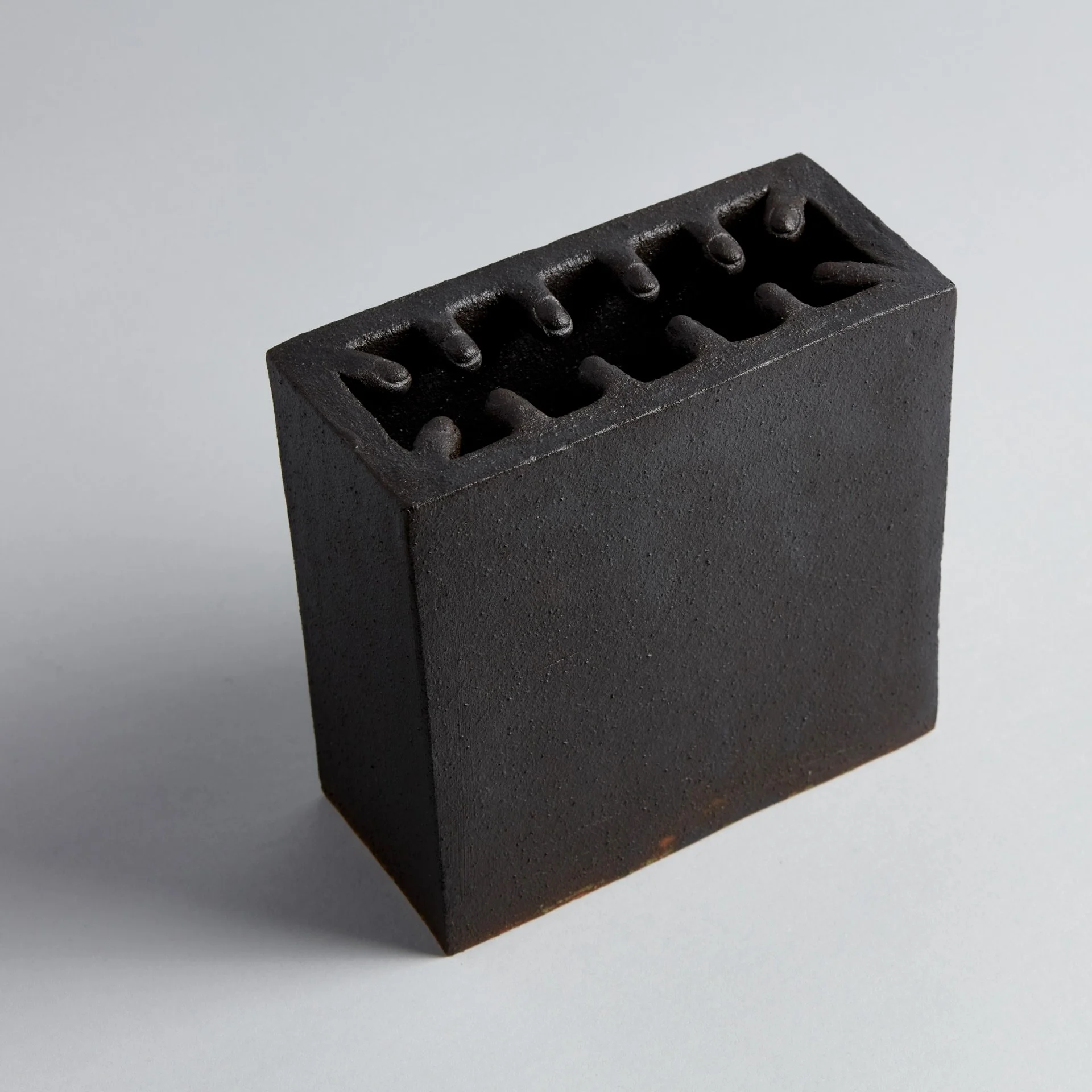 Image 3 of 3
Kyoto, Japan
Showa Period (1926-1989), c. 1970s
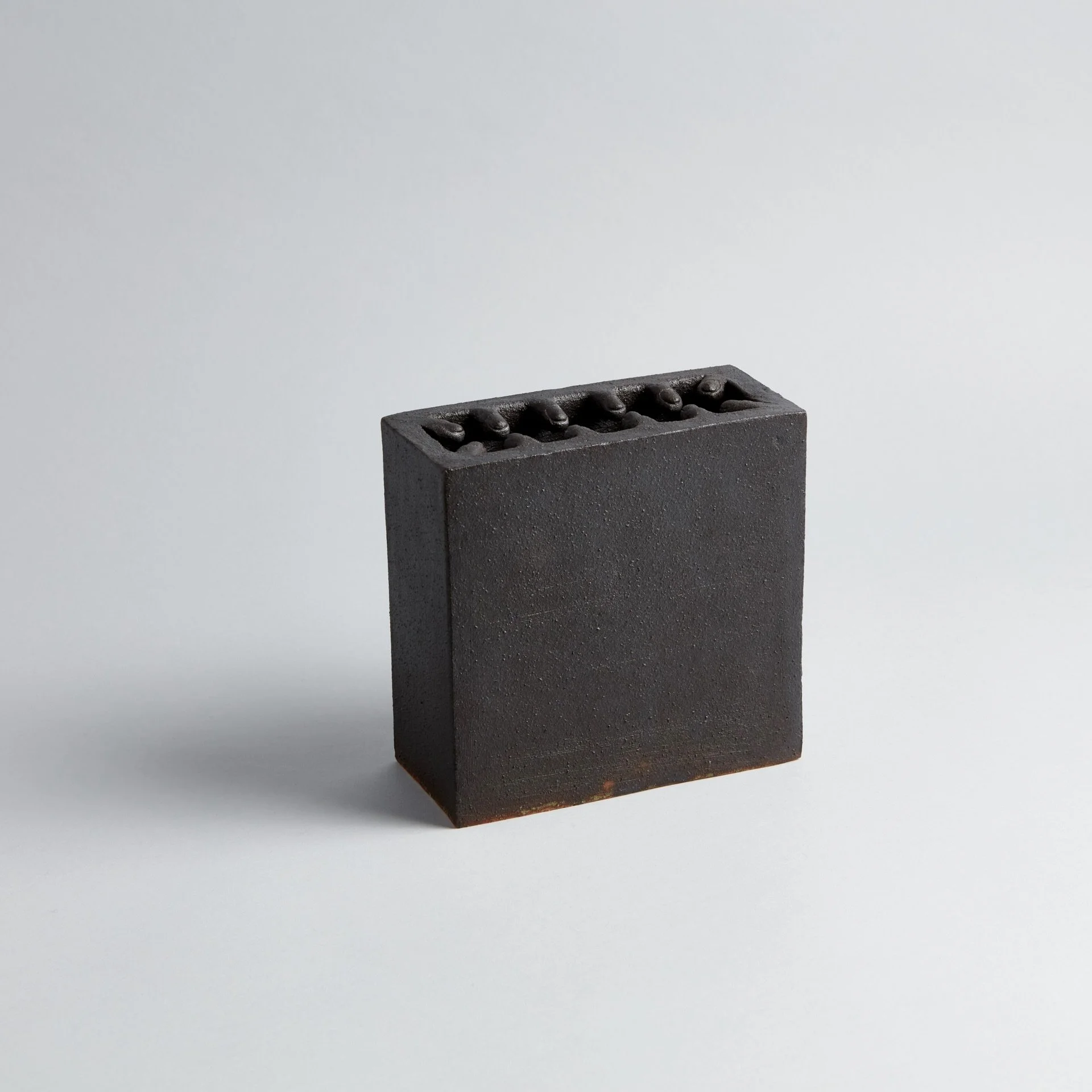
Of rectangular form with a row of fingers pointed inwardly around the mouth, covered in a matt iron glaze, impressed mark to base. Together with the signed box (tomobako). Cat. 436
15.75cm high, 16.25cm wide.
Kumakura Junkichi (熊倉順吉, 1920–1985) was an influential Japanese ceramic artist and a leading figure in the post-war avant-garde ceramics movement. Born in Kyoto, he graduated from Kyoto Higher Technical School in 1942, specialising in design and architecture, before turning to ceramics after the Second World War. He studied under Fukuda Rikisaburō and the renowned ceramic artist Tomimoto Kenkichi, whose influence informed his early exploration of form and surface. In 1957 he joined Sōdeisha, the pioneering avant-garde ceramic group founded in Kyoto, which sought to liberate ceramics from traditional functional forms and establish clay as an independent sculptural medium. Kumakura developed a highly individual approach to ceramic sculpture, characterised by bold organic and abstract forms, expressive surfaces and an experimental use of colour and glaze. Deeply inspired by jazz, particularly free jazz, he explored themes of music, the human body and sexuality in increasingly unconventional works. His international recognition included the Grand Prix at the 1958 Brussels World's Fair and a silver medal at the 1962 International Ceramics Exhibition in Prague.