
 Image 1 of 4
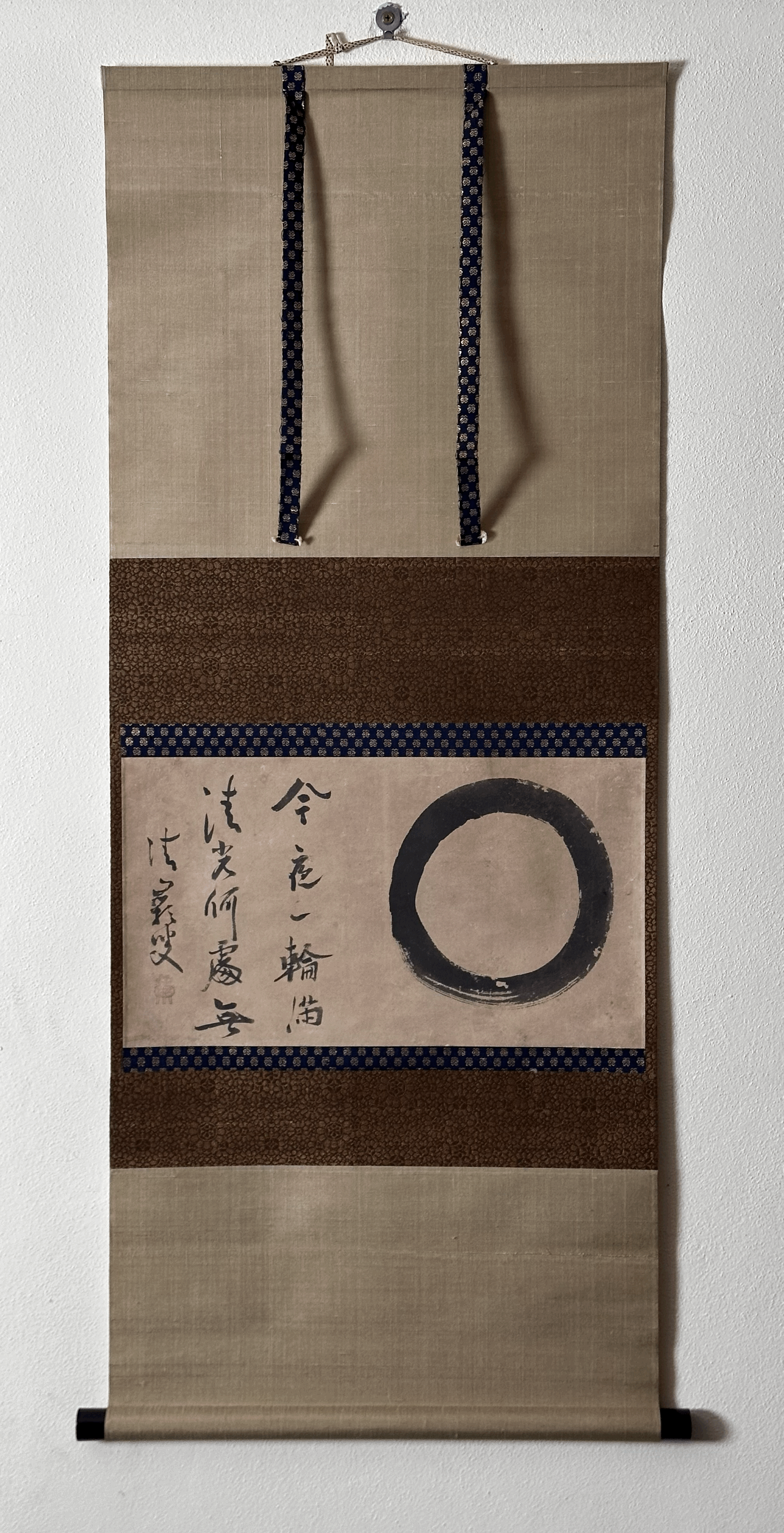 Image 2 of 4
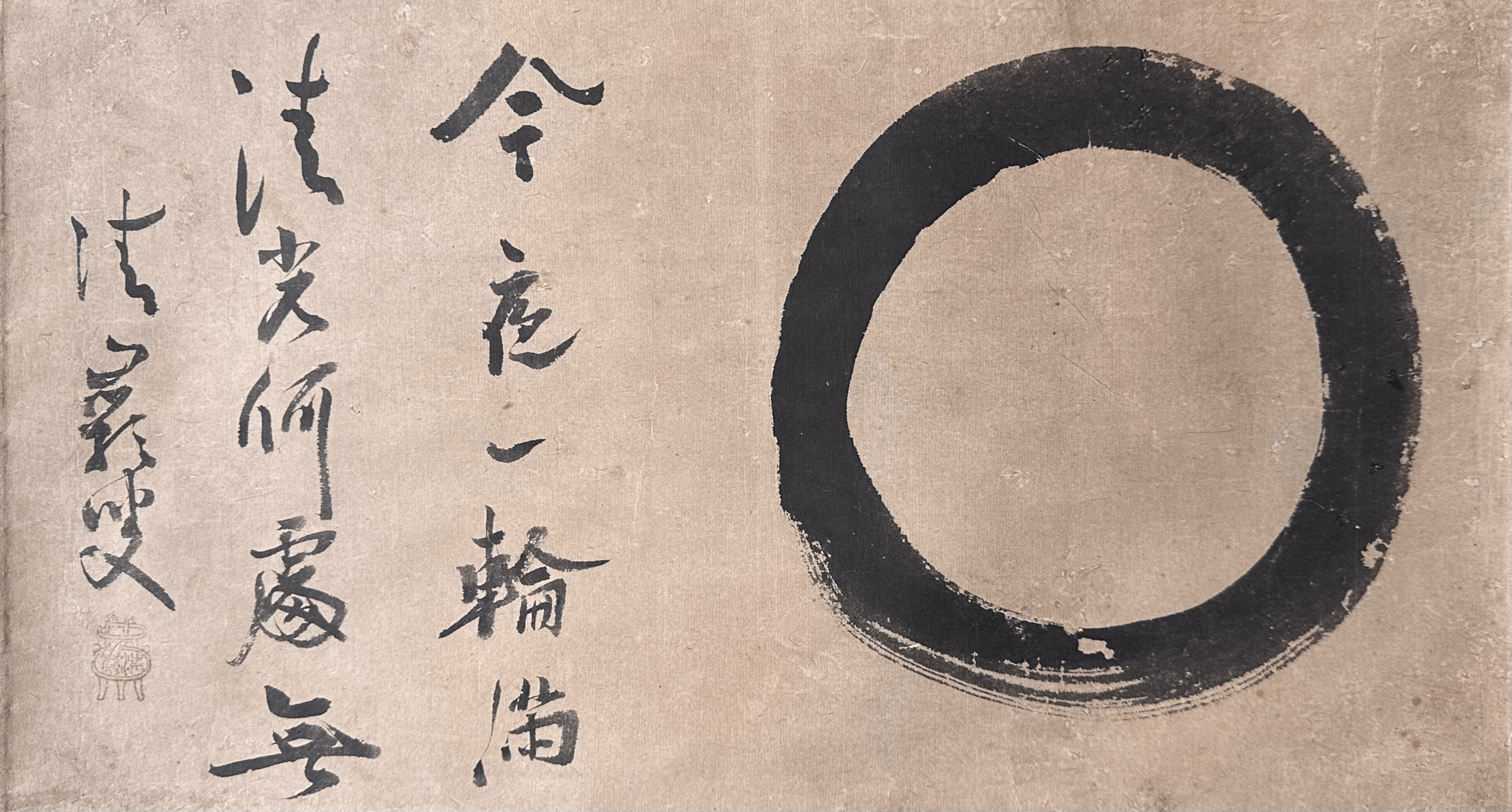 Image 3 of 4
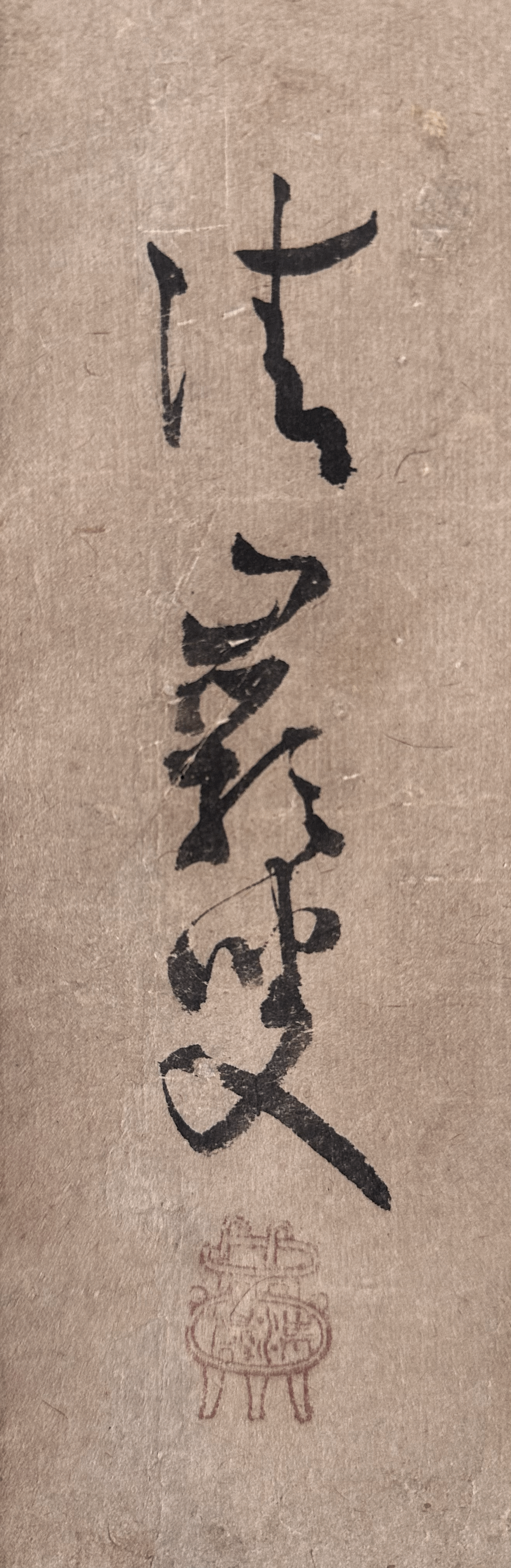 Image 4 of 4
Kyoto, Japan
Edo Period (1615-1868), c. 1650s
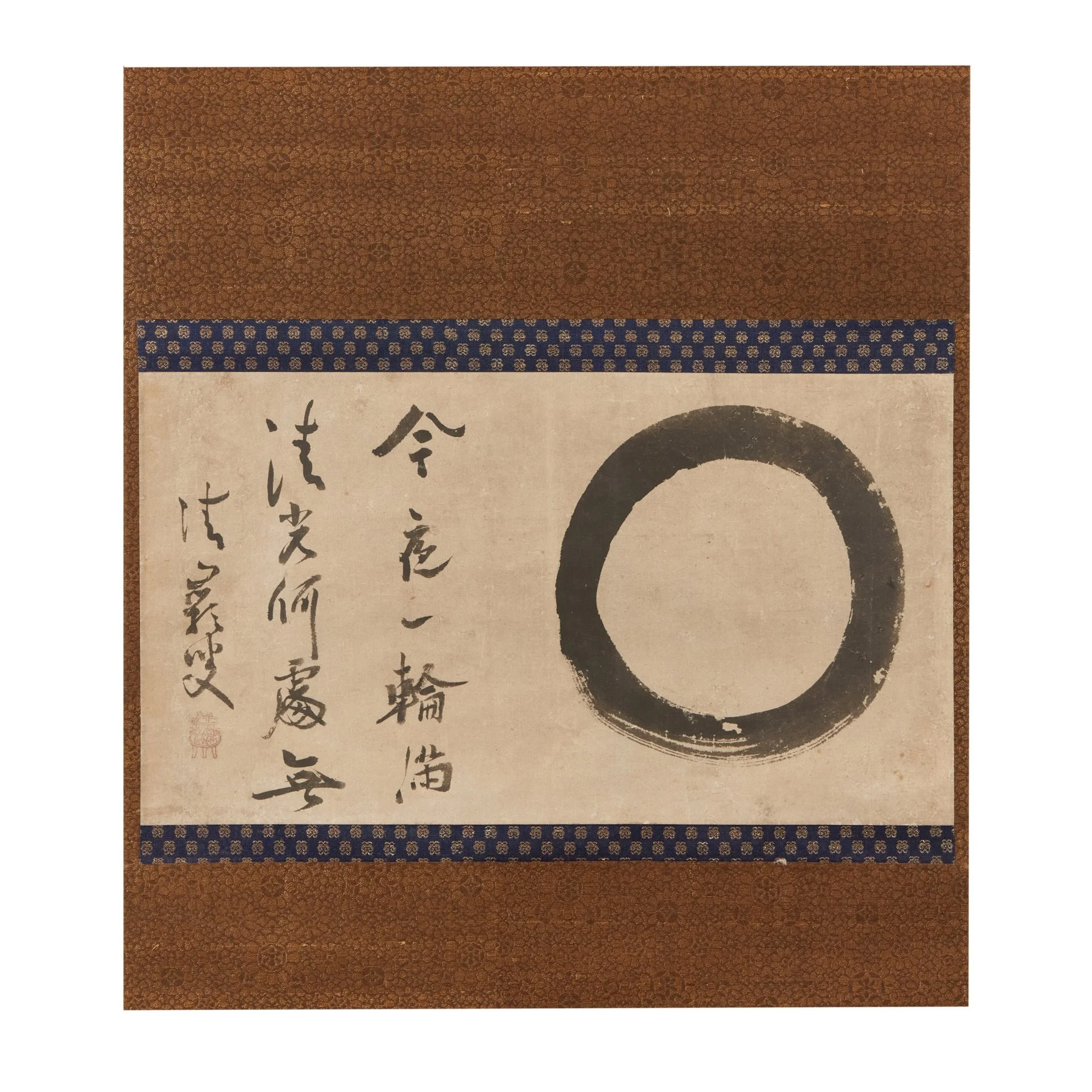
Written in black ink on paper with a Zen circle representing the moon and a poem translating as ‘Tonight, the single circle of the full moon shines complete; where could its pure light fail to reach?’. Signed and with a cauldron-shaped seal. Together with a box with authenticity (hakogaki) by Nakamura Kaisen (1881-1972).
25.8cm high, 46.5cm wide (scroll mount 120.5cm high, 48.7cm wide)
Provenance: Nakamura Kaisen Collection, Kyoto. Kaisen was a painter, calligrapher and renowned collector of Seigan’s calligraphies.
Seigan Sōi (清巌宗渭, 1588–1661) was an eminent Japanese Rinzai Zen Buddhist monk, calligrapher and tea practitioner of the early Edo period. Born in Ōmi Province (present-day Shiga Prefecture), he entered the priesthood at the age of nine at Kyoto’s Daitokuji, where he studied under Gyokuhō Jōsō and subsequently inherited the Dharma lineage of Kenkoku Sōryō. In 1625 he became the 170th abbot of Daitokuji, one of the most influential Zen temples in Japan, and was closely associated with the warrior and tea master Hosokawa Tadaoki (Sansai). In 1649, at the invitation of Tokugawa shogun Iemitsu, he assumed the abbacy of Tōkaiji Temple in Shinagawa, Edo. A distinguished exponent of Zen calligraphy, Sōi was celebrated for his vigorous, expressive brushwork and was traditionally counted among the Daitokuji Sanpitsu (Three Great Calligraphers of Daitokuji), alongside Takuan Sōhō and Kōgetsu Sōgan. His calligraphy, particularly his bold single-character and one-line compositions, became highly prized as hanging scrolls (kakemono) in the tearoom, where the written word was regarded as the most important element of the tea setting. A respected authority on the Way of Tea, he was a spiritual mentor to Sen Sōtan, grandson of Sen no Rikyū, and authored the Seigan Zenji Jūhachi-kajō (Eighteen Principles of Seigan Zenji), a treatise outlining the principles and conduct of tea practice. His writings and calligraphy embody the close relationship between Zen Buddhism and the aesthetics of wabi-cha that shaped Japanese tea culture in the early Edo period.