
 Image 1 of 3
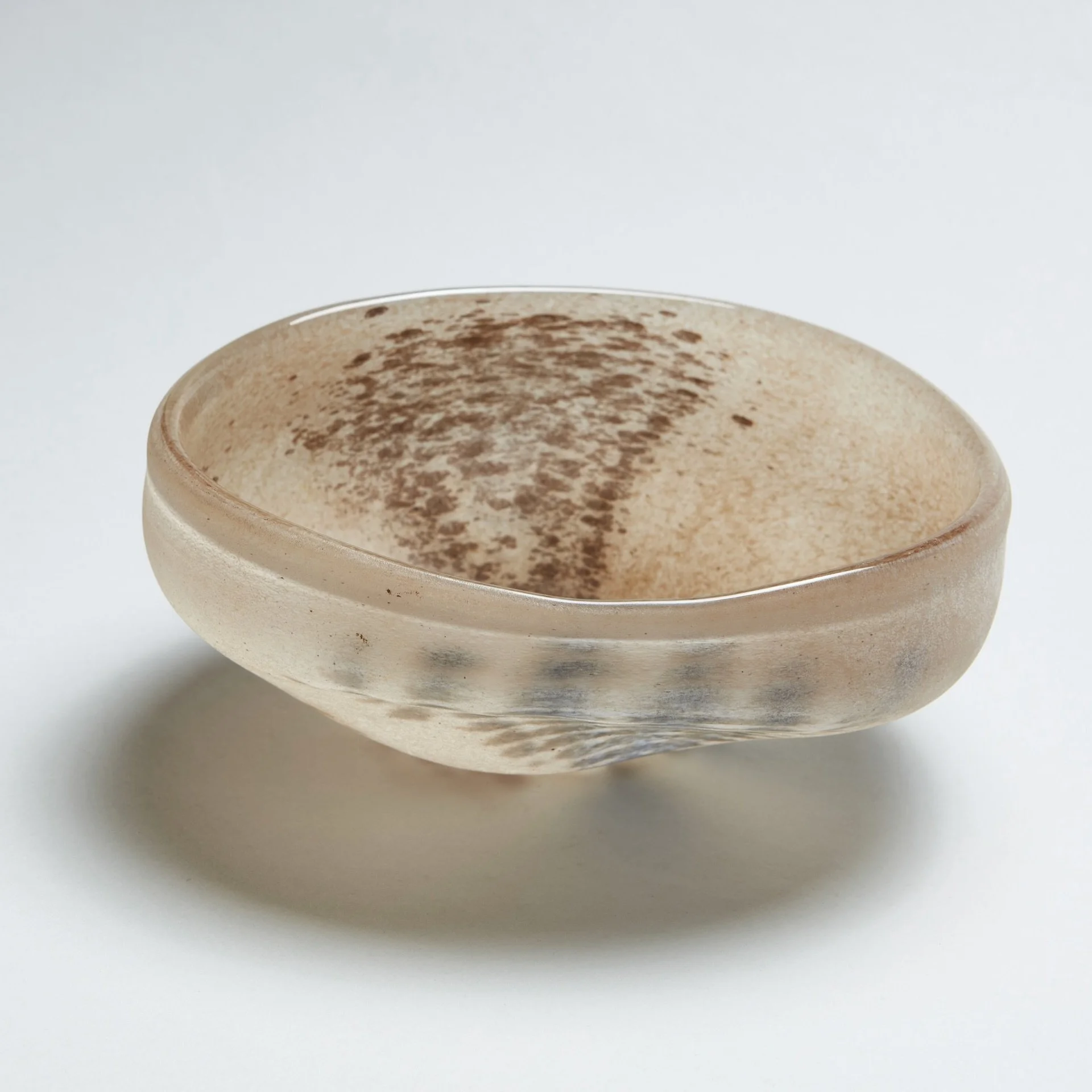 Image 2 of 3
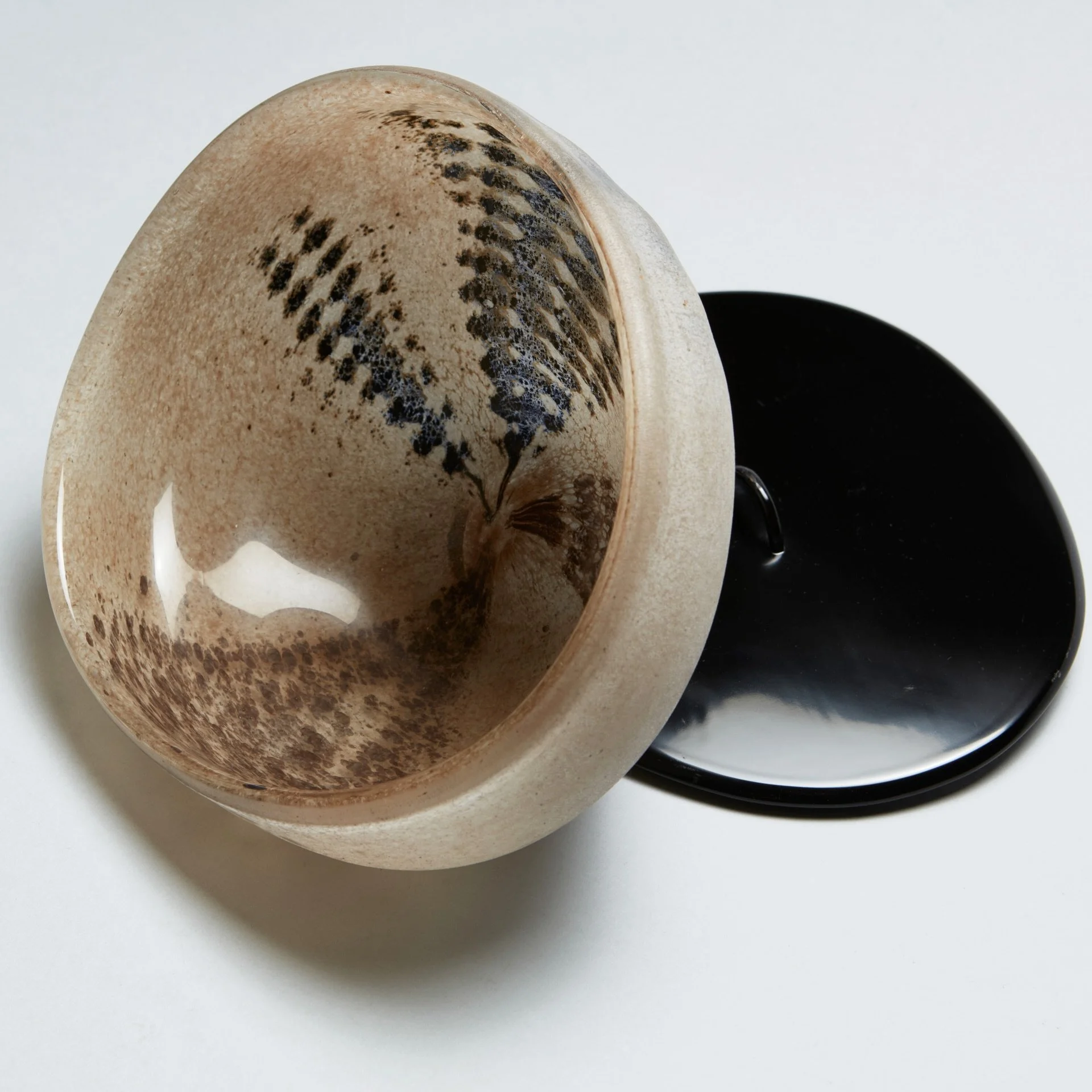 Image 3 of 3
Showa Period (1926-1989), c. 1960s
Tokyo, Japan
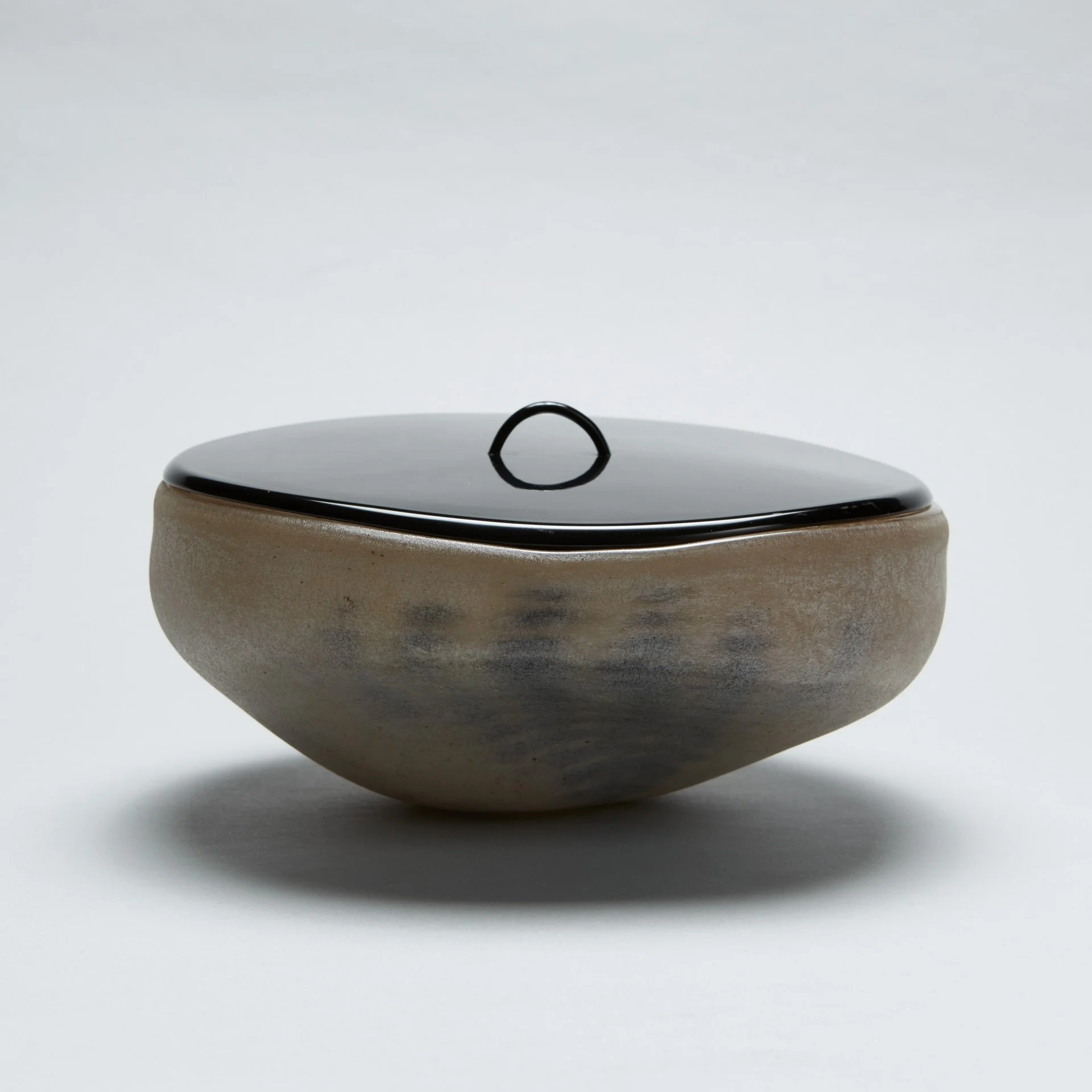
Formed in glass with a translucent textured outer finish reminiscent of stone, the interior smooth and transparent showing abstracted coloured glass twists. With the tomobako (signed box), and lacquer lid.
9cm high, 21cm wide
Iwata Toshichi (1893–1980) was a pioneering Japanese glass artist widely regarded as one of the founders of modern Japanese art glass. Initially trained in Western painting, metalwork and sculpture at the Tokyo School of Fine Arts, he turned to glass in the late 1920s, establishing the Iwata Glass Works in 1931. Renowned for his innovative use of richly coloured glass and free-blown forms, he developed a distinctive sculptural language that drew inspiration from natural forms and traditional Japanese aesthetics. His experimental approach elevated glass beyond its conventional utilitarian role, exploring its capacity for colour, light, texture and movement. He collaborated with leading ikebana practitioners, notably Teshigahara Sōfū, and also produced glass vessels for the tea ceremony. Awarded the Japan Art Academy Prize in 1951, the Mainichi Art Prize in 1969 and designated a Person of Cultural Merit in 1970, Iwata was instrumental in establishing glass as an independent artistic medium in Japan.