
 Image 1 of 4
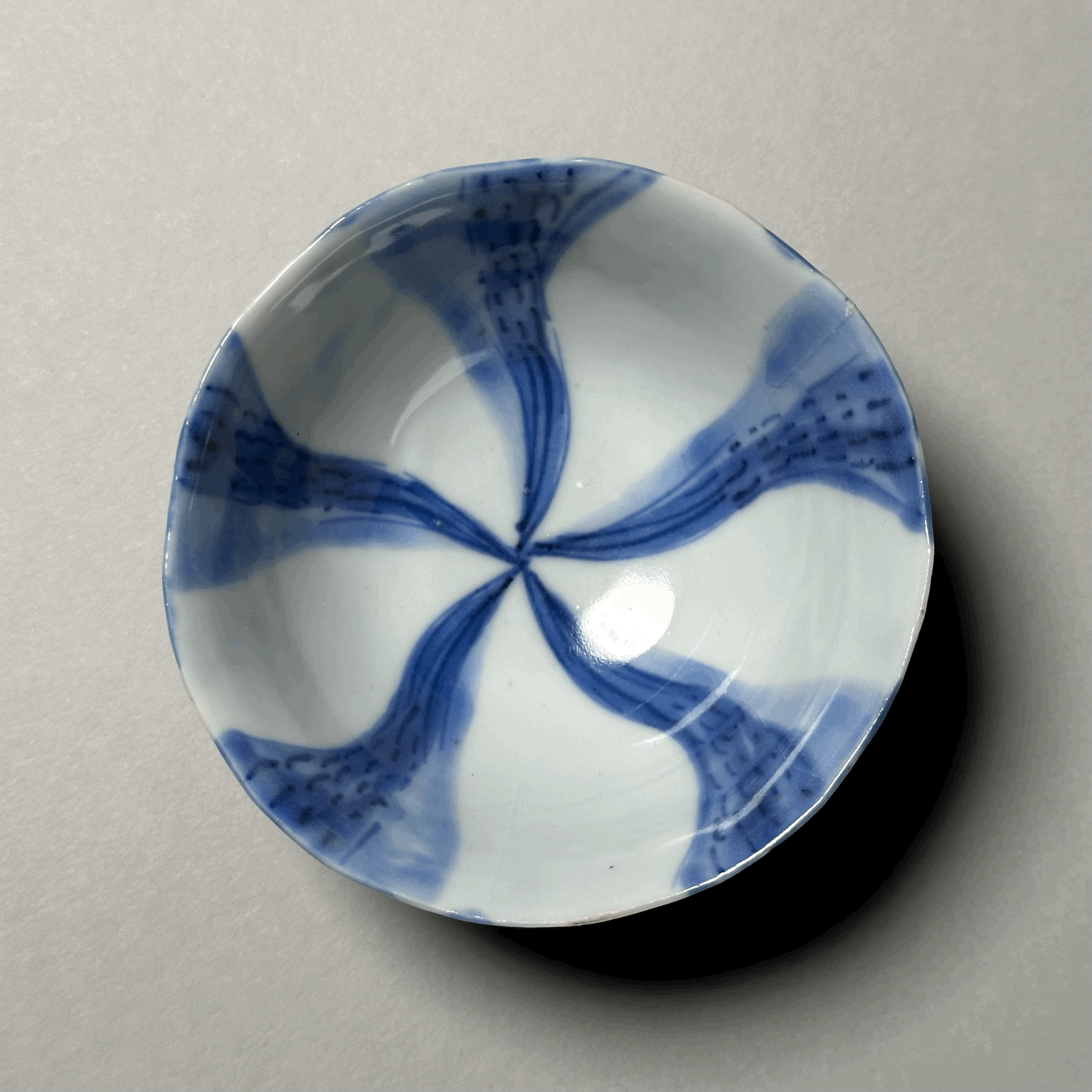 Image 2 of 4
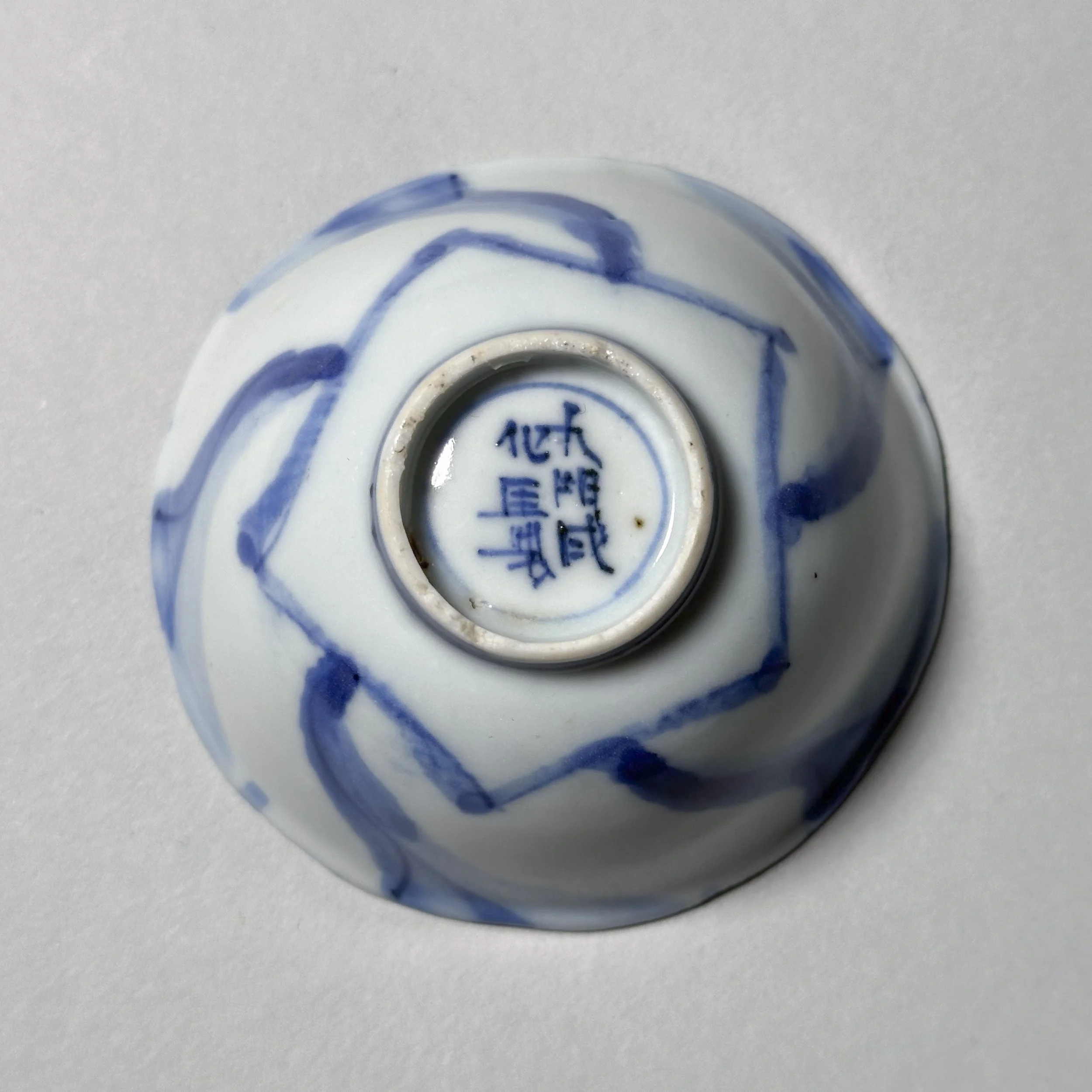 Image 3 of 4
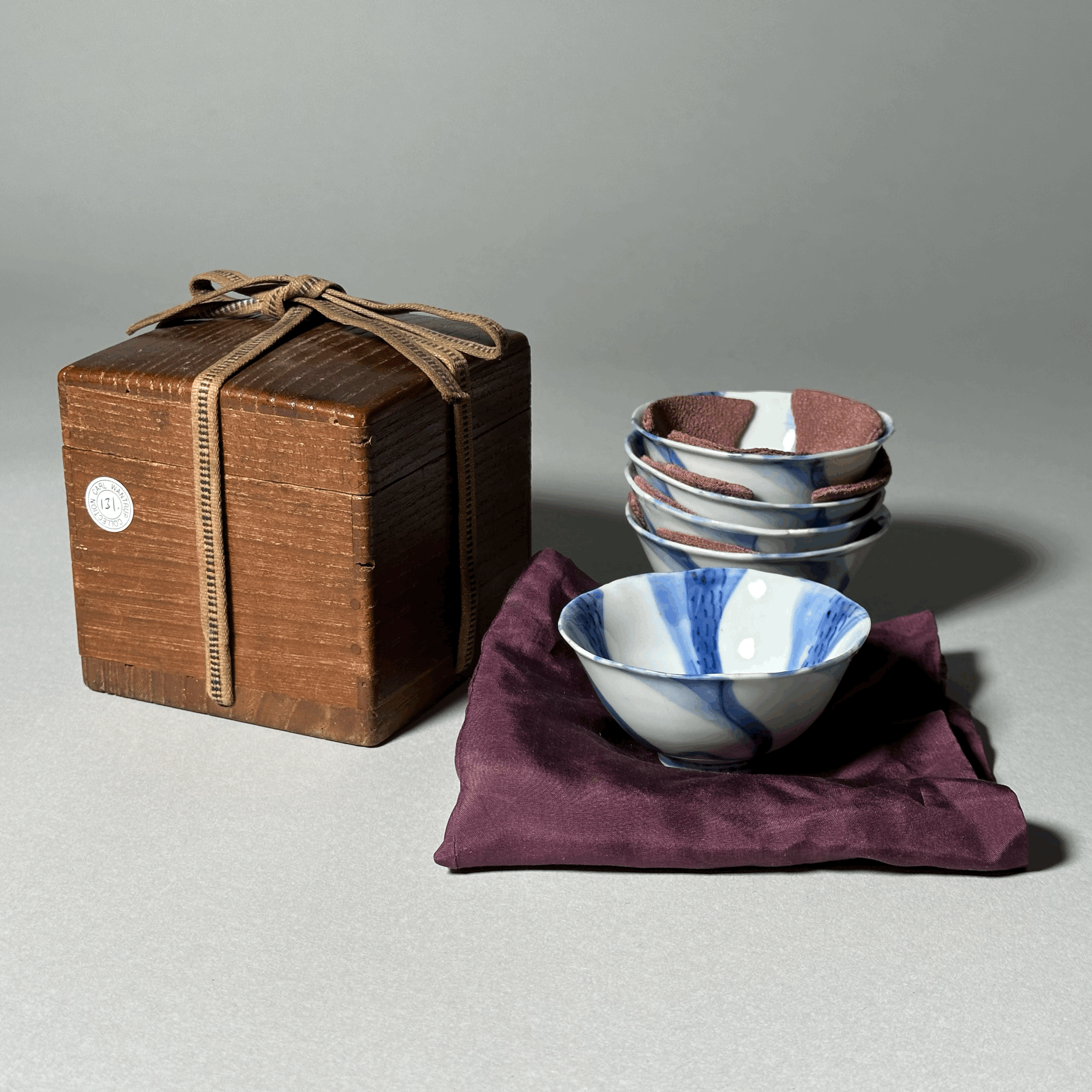 Image 4 of 4
Jingdezhen, China
Ming Dynasty, Tianqi Period (1620-1627)
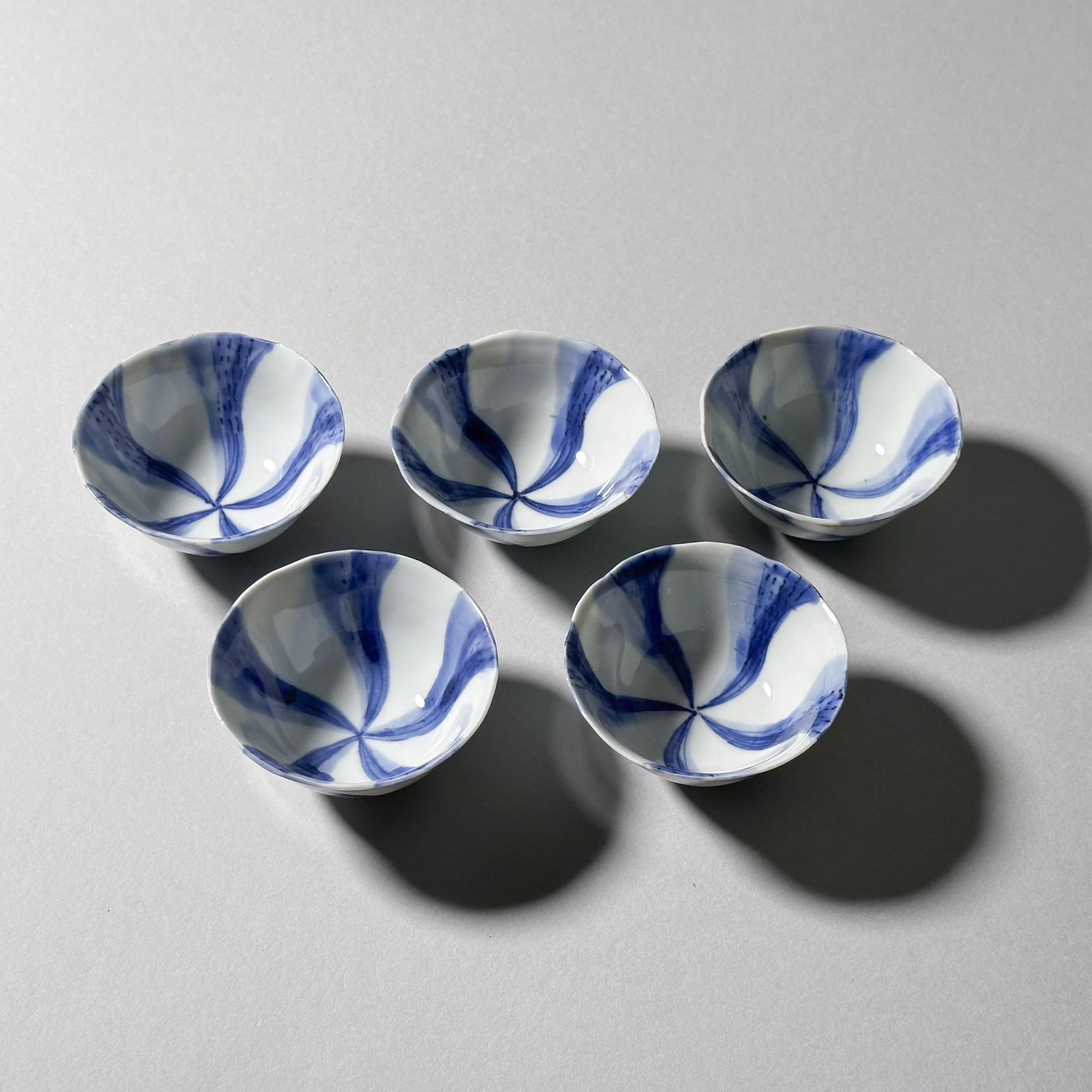
For sake or sencha tea, finely decorated with neji (twist) design to the interior, the exterior with five s-shaped lines emerging from a pentagon, resembling the underside of a plum blossom, the base with a six-character Daimin Seika nensei (Chinese: Da Ming Chengua nian zhi) mark. 3.75cm, high, 7.75cm diameter. Together with an early Edo Period Japanese wooden box and fitted purple silk protecting cloths. Cat. 131. Item 1 in our exhibition Wabi-Sabi Blue: Kosometsuke for the Tea Room, 2025.
For an example of the same design see Kosometsuke: Monochrome Section, Masahiko Kawahara, Kyoto Shoin Co., Ltd., 1977, p. 129 / pl. 495-496.
Condition report (carefully viewed under UV, strong light and magnification): natural small frits to the rims of each of the cups (production/firing flaws). One cup with two short unstained hairline cracks to the rim. Glaze in excellent condition, no further faults or damage.
Jingdezhen, China
Ming Dynasty, Tianqi Period (1620-1627)
For sake or sencha tea, finely decorated with neji (twist) design to the interior, the exterior with five s-shaped lines emerging from a pentagon, resembling the underside of a plum blossom, the base with a six-character Daimin Seika nensei (Chinese: Da Ming Chengua nian zhi) mark. 3.75cm, high, 7.75cm diameter. Together with an early Edo Period Japanese wooden box and fitted purple silk protecting cloths. Cat. 131. Item 1 in our exhibition Wabi-Sabi Blue: Kosometsuke for the Tea Room, 2025.
For an example of the same design see Kosometsuke: Monochrome Section, Masahiko Kawahara, Kyoto Shoin Co., Ltd., 1977, p. 129 / pl. 495-496.
Condition report (carefully viewed under UV, strong light and magnification): natural small frits to the rims of each of the cups (production/firing flaws). One cup with two short unstained hairline cracks to the rim. Glaze in excellent condition, no further faults or damage.