
Cool Shadow of the Bright Moon
An Exhibition of Works by Otagaki Rengetsu (1791-1875)
Sydney, 7-10 November 2024
The cool shadow
Of the bright moon
In an open field
Makes you forget
All daytime worries
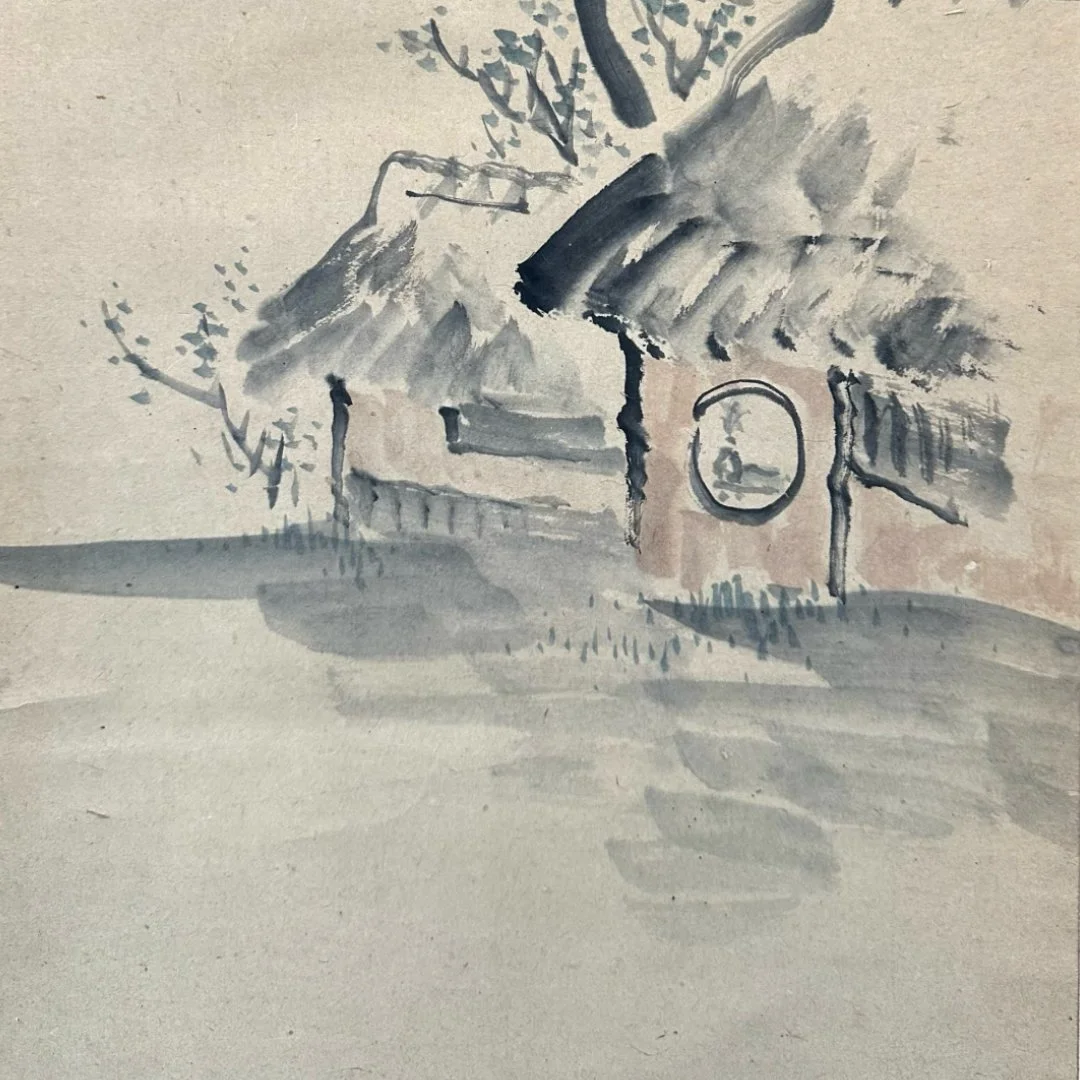
This exhibition focuses on seven works including three works on paper and four inscribed ceramics, led by a rare painting of Rengetsu at work in her hut.
Skilled in poetic composition, calligraphy, painting and pottery, Rengetsu is widely regarded as one of the greatest waka poets of the 19th century.
Following personal tragedies, in 1823 at the age of 33 Rengetsu became a Buddhist nun of the Pure Land sect. Her Buddhist name combined lotus (ren) and moon (getsu). Her nun’s garments and shaved head are depicted in portraits such as those by Tomioka Tessai.
When her father died in 1832, to support herself Rengetsu began to compose waka poems, brushing them on thin strips of paper called tanzaku, square sheets of paper called shikishi and brushing or carving them on her pottery. She sold her works and gained an ever increasing following. Rengetsu loved travelling and all encounters (of nature and people) on the road provided inspiration for her elegant and meaningful poems.
Rengetsu spent time in the Okazaki district near many of Kyoto’s great kilns and collaborated with several well-known potters, including Kuroda Koryo of the Koryozan kiln and Kinkozan VI (1824~1884). She learned how to hand-build pottery and she made many different rugged forms of ceramics. She inscribed them with her poems either painting or scoring into the clay her distinctive simple style of calligraphy. This combination of poetry, calligraphy and pottery made her unique as an artist.
Rengetsu inscribed the paintings of famous Kyoto painters, including Tomioka Tessai (1837~1924) who became a close friend. From 1865 Rengetsu lived in a small hut in the remote and spiritual precincts of Jinkou’in (Temple of Heavenly Light), in the small village of Nishigamo, a short distance from Kyoto, until her passing in 1875. In that last decade she was very productive and flourished artistically.